Using the Rodger Wireless Alarm

This alarm is becoming very popular and is well-suited for children who prefer to wear the special moisture sensing underwear and to get out of bed to turn off the alarm unit. There is no shoulder unit with this alarm.

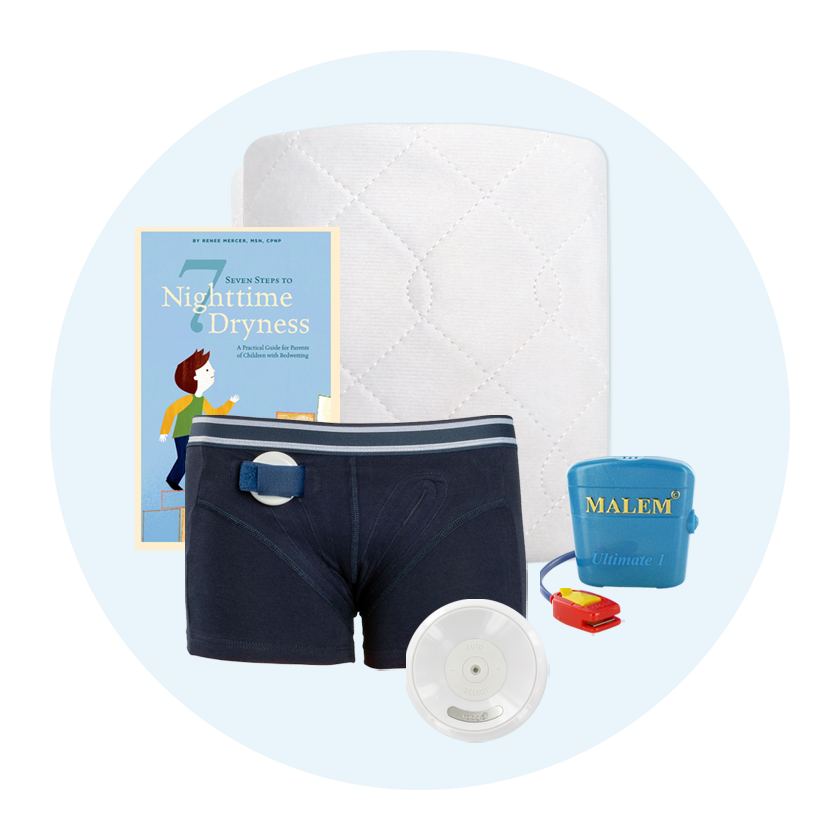
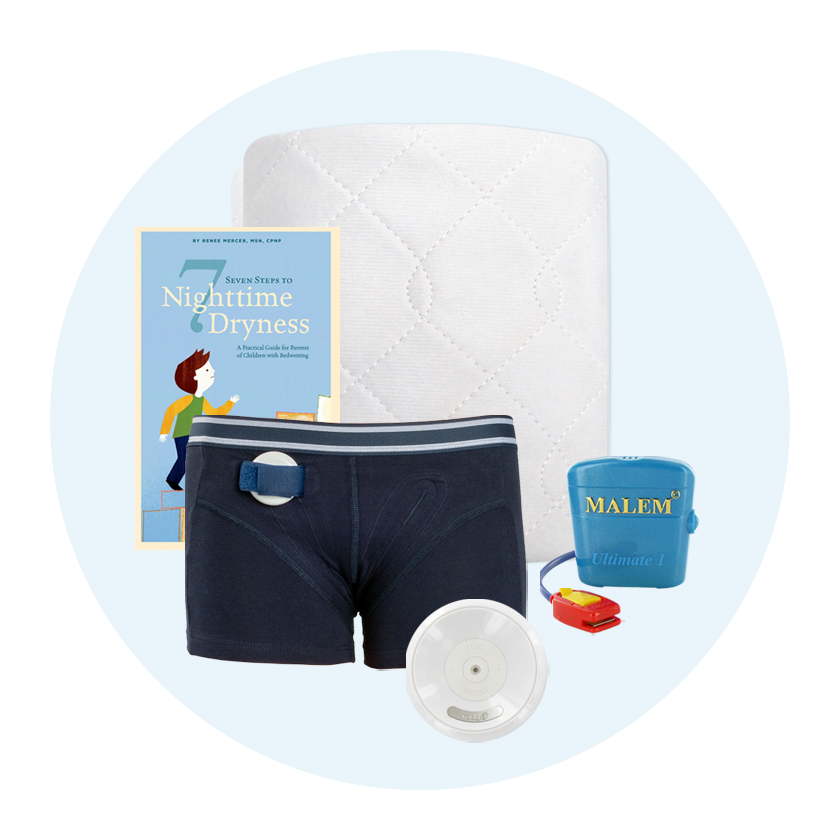
The Rodger Wireless Alarm has 3 parts.

The underwear:
Have the special moisture sensing threads built in
Are comfortable to wear and easy to remember to put on
Are machine washable and dryable (just remember to remove the snap-on transmitter before washing)
Make snapping on the transmitter easy to do

The transmitter:
Snaps on the underwear and is secured with the Velcro strap
Sends a signal to the receiver when moisture is sensed
Needs to be paired with the receiver when you receive it
Is small and comfortable
Requires a CR2032 battery, which is included in the package or already installed
Should be unsnapped from the underwear when not being used

The receiver:
Can be plugged into the wall or use AAA batteries, not both at the same time
Is where the sound comes from
Can make 8 different sounds, just listen to the sounds and push SELECT when you pick your favorite
Has a volume adjustment; press + or – to raise or lower the volume after triggering the alarm to sound
Is turned off and on by pressing the large button in the middle
Should be turned off in the morning and on at night

This wireless alarm can be ordered with an additional receiver for parent’s room. This is especially helpful if you are located far from your child’s room. This second receiver sounds at the same time as the child’s receiver and can be turned off when your child handles everything independently.

If you choose a vibrating cushion as an accessory to this alarm, it is connected directly into the alarm receiver. The receiver must be plugged in, not running on batteries for this to work. The vibrating cushion is placed on the bed and adds the vibratory stimulus to help alert your child.

Posted in Bed wetting Girl, Bedwetting alarms, Bedwetting Boy, Product reviews | Tagged , , , , | Leave a comment

Tips for Knowing When to Start a Bedwetting Alarm

Most children are able to stay dry at night by age 5, however, 15% of 5 year olds and 5 % of 10 year olds continue to have nighttime wetting. Bedwetting does become less frequent as children get older, but many families would like to help their children get to dryness sooner rather than later. Research proves that bedwetting alarms are the most effective way to do this.

Here are 5 tips to help you know when the time is right for starting an alarm.

Your child:

Is at least 5 or 6 years old and wets most nights.
Around this age, children are likely to have the maturity to be able to respond to the alarm, go to the bathroom and return to their bed.

Begins making comments about wanting to stay dry or stop using pull-ups.
Your child notices other kids their age stay dry at night and wonders why they can’t do the same. Even if you have been very careful to be positive and supportive, children want to be like their peers. Pull-ups are fine until treatment with a bedwetting alarm is begun. Then I recommend switching to cloth underwear.

Has no new changes in the household.
Because starting an alarm requires parent/family participation, begin at a time when you do not have travel, have schedule changes or increased work obligations. The first 2-3 weeks are the hardest.

Is able to stay reliably dry during the day.
If your child has leaking during the day or does not go independently without a reminder, this should be corrected before you start working on nighttime dryness.

Is feeling frustrated that they can’t stay dry on their own.
Even older children (over 10 years) can get to dryness with an alarm. So if your child hasn’t been motivated in the past or you have been patiently waiting for them to “outgrow” it, know that it isn’t too late to use a bedwetting alarm.

Posted in About Bedwetting, Bedwetting alarms, FAQs, Parental assistance, Potty Training, Readiness | Tagged , , , , , | Leave a comment

Do’s and Don’ts When Treating Bedwetting

I want to share a recent article I wrote for Expert Beacon, who contacted me to be their expert on the topic of bedwetting. Read the 5 Do’s and the 5 Don’t in my series of tips you should use to help your child stop bedwetting. The article is “Patience and tenacity are key in helping children stop wetting the bed”. You can also view our video on How Bedwetting Alarms Work.

Posted in About Bedwetting, Bedwetting alarms, FAQs, Parental assistance | Tagged , , , , | Comments Off